Antibody-Drug Conjugates (ADCs) Explained
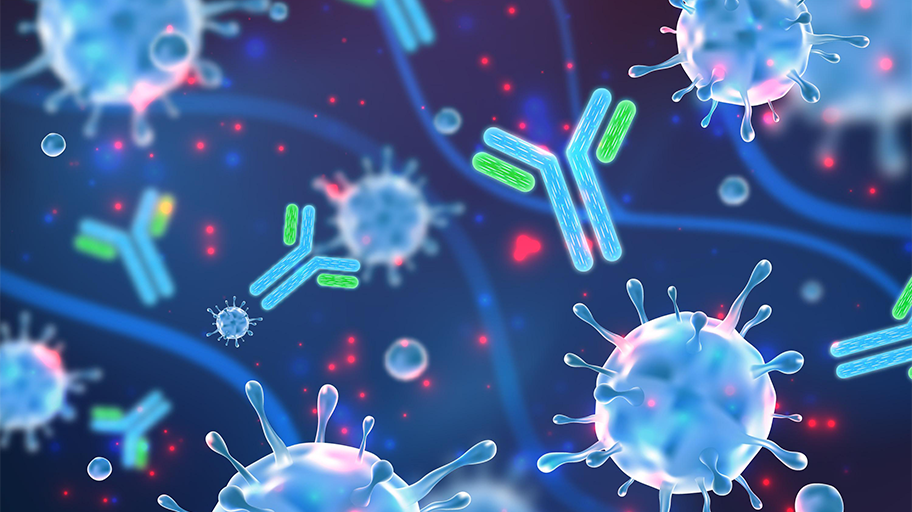
An antibody-drug conjugate (ADC) is a targeted cancer therapy that links a monoclonal antibody to a potent cytotoxic drug via a chemical linker. The antibody recognizes and binds to a protein expressed on cancer cell surfaces, delivering the toxic payload directly into the tumor cell. This precision approach spares healthy tissue from chemotherapy’s broad damage. As of 2025, more than 15 ADCs have received FDA approval, and the global ADC market reached approximately $12.26 billion in 2024, according to Grand View Research’s ADC market analysis (January 2026).
What Are the Three Core Components of an ADC?
Every ADC is built from three distinct parts, each with a specific job. Getting all three right determines whether the drug reaches its target safely, releases its payload at the right moment, and kills the cancer cell without collateral damage.
| Component | Function | Example |
| Monoclonal antibody | Locates and binds to a target antigen on the cancer cell surface | Anti-HER2 antibody in Enhertu |
| Cytotoxic payload | Kills the cell after release inside the lysosome | DXd (topoisomerase I inhibitor) |
| Chemical linker | Keeps payload attached in circulation; releases it inside the tumor cell | Cleavable peptide linker |
Each component affects the therapeutic window. A linker that breaks down too early causes systemic toxicity; one that stays intact too long prevents payload release altogether.
The antibody component determines target selectivity. Most approved ADCs use IgG1 monoclonal antibodies because of their stability and long circulating half-life. For a deeper look at how antibodies function, the therapeutic antibodies guide from Biotech Primer covers the underlying biology.
How Does an ADC Work Inside the Body?
ADCs follow a five-step mechanism from injection to tumor cell death. Each step must succeed for the drug to work.
- The ADC enters the bloodstream and circulates until the antibody detects its target antigen on a cancer cell surface.
- The antibody binds tightly to the antigen, triggering receptor-mediated endocytosis – the cell essentially pulls the ADC inside.
- An endosome forms around the internalized ADC and fuses with a lysosome, the cell’s acidic degradation compartment.
- The acidic or enzymatic environment inside the lysosome cleaves the linker, releasing the cytotoxic payload.
- The freed payload disrupts cell division or damages DNA, triggering apoptosis – programmed cell death – in the tumor cell.
Some ADCs also produce a bystander effect. The released payload diffuses out of the dying tumor cell into the surrounding tumor microenvironment, killing adjacent cancer cells even if they do not express the target antigen. This feature is especially valuable in solid tumors where antigen expression is uneven across the mass.
Understanding how the tumor microenvironment influences drug distribution helps explain why bystander activity varies between ADC designs.

What Makes ADCs Different from Conventional Chemotherapy?
Conventional chemotherapy kills rapidly dividing cells without distinguishing cancer from healthy tissue. Hair loss, immunosuppression, and gastrointestinal damage are direct consequences of that lack of specificity. ADCs address this by restricting the cytotoxic payload to cells that display the target antigen.
The trade-off is complexity. Traditional chemotherapy agents are small molecules manufactured through chemical synthesis. ADCs combine a large biologic antibody with a small molecule drug, joined by a linker chemistry that must remain stable in plasma for days or weeks. This makes production far more demanding.
| Attribute | Conventional Chemotherapy | Antibody-Drug Conjugate |
| Target selectivity | Low – affects all dividing cells | High – guided by antigen expression |
| Systemic toxicity | High – broad off-target effects | Lower – limited to antigen-expressing cells |
| Payload potency | Moderate | Very high – payloads too toxic for systemic use |
| Manufacturing complexity | Low to moderate | High – biologic + small molecule integration |
| Cost | Generally lower | Significantly higher |
ADCs can use payloads 100 to 1,000 times more potent than standard chemotherapy agents. At those toxicity levels, the payload would cause severe harm if circulated freely. The antibody acts as a carrier that makes the delivery safe enough for clinical use.
Which Cancers Are Currently Treated with ADCs?
ADC approvals now span both blood cancers and solid tumors, though breast cancer remains the largest indication by market share. The breast cancer segment accounted for approximately 41% of global ADC revenue in 2024, according to Grand View Research’s ADC market analysis (January 2026).
Current FDA-approved ADCs cover these cancer types:
- Breast cancer: HER2-positive, HER2-low, HER2-ultralow, and triple-negative subtypes (Enhertu, Kadcyla, Trodelvy, Datroway)
- Blood cancers: Acute myeloid leukemia, Hodgkin lymphoma, diffuse large B-cell lymphoma, multiple myeloma (Mylotarg, Adcetris, Besponsa, Zynlonta)
- Urothelial and bladder cancer (Padcev)
- Ovarian cancer (Elahere)
- Non-small cell lung cancer: TROP2-targeted and c-Met-targeted approvals gained in 2025 (Datroway, Emrelis)
In 2025, two new ADCs received FDA accelerated approval for lung cancer, according to a review in PMC covering ADC regulatory milestones (2025). This extends ADC use well beyond the early focus on hematologic malignancies.
What Are the Main Challenges in ADC Development?
Most ADC programs that fail in clinical trials run into one of four categories of problems. Identifying which failure mode applies early can save years of development time.
- Antigen heterogeneity: Not all cells in a tumor express the target antigen at equal levels, which lets some cells escape the ADC entirely
- Linker instability: Premature payload release in plasma before the ADC reaches the tumor causes off-target toxicity
- Drug resistance: Cancer cells can downregulate antigen expression, activate drug efflux pumps, or alter the lysosomal pathways that release the payload
- Manufacturing complexity: Conjugation processes must achieve a consistent drug-to-antibody ratio (DAR); variation in DAR directly affects both potency and safety
Drug-to-antibody ratio matters more than many researchers initially expect. A DAR that is too low reduces potency; one that is too high causes aggregation and faster clearance. Most approved ADCs target a DAR of approximately 2 to 4. The biomanufacturing complexity behind this is explored further in how biologics are made on the Biotech Primer platform.
What Is the Difference Between Cleavable and Non-Cleavable Linkers?
The linker type dictates how and where the payload is released. Cleavable linkers are engineered to break apart under specific conditions – low pH in lysosomes, enzyme activity, or high glutathione concentrations inside cancer cells. Non-cleavable linkers require the entire antibody to be degraded by the lysosome before the payload is freed.
Cleavable linkers dominate the market, holding approximately 68% of global ADC revenue in 2024. They enable the bystander effect because the small-molecule payload can diffuse through the cell membrane after release. Non-cleavable linkers produce a charged metabolite that stays inside the cell, limiting bystander activity but potentially reducing off-target exposure in normal tissue.
Neither approach is universally superior. The right choice depends on how uniformly the target antigen is expressed in the tumor type being treated.
How Big Is the ADC Market and Where Is It Heading?
As of 2025, the global ADC market is valued at approximately $12 to $16 billion, depending on the research firm and methodology. Projections consistently point to values between $28 billion and $35 billion by the mid-2030s. Pfizer paid $43 billion to acquire Seagen in 2023, and AbbVie paid $10.1 billion for ImmunoGen, signaling how seriously major pharmaceutical companies view ADCs as a long-term revenue category.
As of January 2026, more than 431 active ADC studies appear on ClinicalTrials.gov, including 83 Phase 3 trials in tumor types beyond breast and hematologic cancers, according to Mordor Intelligence’s ADC market forecast (2025).
North America currently holds the largest regional share, driven by FDA approval infrastructure, a high cancer burden, and concentrated pharmaceutical R&D investment. Asia Pacific is growing fastest, with China and Japan both investing heavily in domestic ADC manufacturing and clinical development. Biotech Primer tracks these developments across the precision oncology landscape as the pipeline continues to expand.
The Road Ahead for ADC Therapies
ADCs represent a meaningful evolution in how oncologists think about cytotoxic treatment. The ability to use payloads too toxic for systemic use – guided by the precision of a monoclonal antibody – changes the risk-benefit calculus for patients with limited options. The science is no longer early-stage: more than 15 approved drugs and over 400 active clinical trials confirm that ADCs have moved firmly into the oncology mainstream.
The next wave of ADC research is focused on bispecific designs that target two antigens simultaneously, next-generation linker chemistries that improve stability, and expanding indications beyond cancer into autoimmune disease. Clinicians and researchers following this space should pay close attention to linker and payload innovation – those advances, more than antibody selection, are likely to define which ADCs succeed in the coming decade.
Frequently Asked Questions
What does ADC stand for in cancer treatment?
ADC stands for antibody-drug conjugate. It is a type of targeted cancer therapy that attaches a monoclonal antibody – which seeks out a specific protein on cancer cells – to a cytotoxic drug via a chemical linker. The antibody delivers the drug directly to the tumor, which limits damage to healthy tissue.
Are ADCs a form of chemotherapy?
How are ADCs administered to patients?
What is the drug-to-antibody ratio (DAR) in an ADC?
What cancers respond best to ADC treatment?
What is the bystander effect in ADC therapy?
Biotech Primer is your go-to source for interactive training across the biotechnology, pharmaceutical, molecular diagnostics, and medical device sectors. Explore a range of in-depth biotech courses designed to deepen your understanding of key principles and applications in the field.
Learn More