Small vs. Large Molecule Drugs Explained
All drugs aim to treat disease. But how they’re built, how they work, and how they’re delivered? That’s where small and large molecules split into two very different worlds. This distinction is one of the first and most important concepts in the biopharma industry. It influences everything from how drugs are discovered to how they are manufactured and approved. It also determines cost, risk, and how quickly a therapy can reach patients. In short, understanding molecule type is understanding the foundation of modern medicine.
Small Molecules: Chemistry-Driven Precision
Small molecule drugs are what most people think of as “traditional” pharmaceuticals—think aspirin or statins. They are chemically synthesized, meaning scientists build them step-by-step using predictable chemical reactions.
They’re called “small” because of their size—typically under 900 daltons. That tiny size is a big advantage. Small molecules can easily enter cells, which allows them to target intracellular processes like enzymes or signaling pathways.
Even better: many can be taken orally. That’s why pills dominate pharmacy shelves.
From a business perspective, small molecules are often cheaper to manufacture and easier to scale. Their structures are well-defined, and generic versions can be produced once patents expire.
This matters because small molecules are versatile, cost-effective, and ideal for chronic conditions where convenient dosing matters.


Large Molecules: Biology In Action
Large molecule drugs, also called biologics, are a different beast. These include monoclonal antibodies, gene therapies, and recombinant proteins like insulin.
Instead of being chemically synthesized, they’re produced inside living cells (often CHO (Chinese Hamster Ovary) cells). That means the manufacturing process is part biology, part engineering.
They’re massive compared to small molecules—often thousands to millions of daltons—and structurally complex. That complexity allows them to be incredibly specific. For example, a monoclonal antibody can bind to a single target on a cancer cell while leaving healthy cells alone.
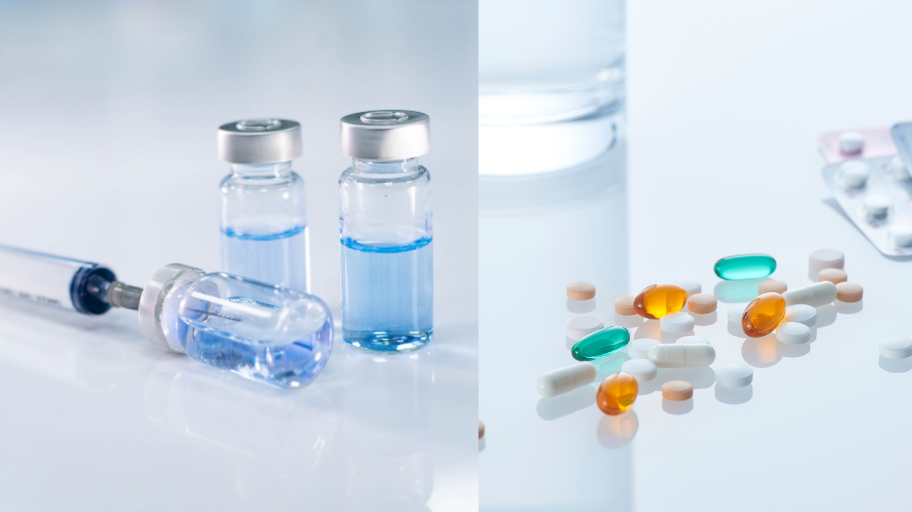
But there’s a trade-off. Large molecules can’t easily enter cells and are usually given by injection or infusion because they would be broken down in the digestive system otherwise.
They’re also more expensive to produce, harder to scale, and sensitive to environmental conditions.
However, biologics are transforming treatment for complex diseases like cancer, autoimmune disorders, and rare genetic conditions.
Key Differences
- Size: Small (<900 daltons) vs. large (thousands+ daltons)
- Source: Chemical synthesis vs. living cells
- Delivery: Oral pills vs. injections/infusions
- Targets: Inside cells vs. outside cells or cell surfaces
- Cost: Generally lower vs. significantly higher
The Bottom Line
These differences drive everything, including development timelines, regulatory strategy, pricing, manufacturing risk, and ultimately, company valuation. When you understand whether a company is developing a small molecule or a biologic, you understand the business behind the science. And in biotech, that’s the difference between guessing …and knowing.
Small molecules offer convenience and scalability. Large molecules offer precision and power.
Empower Yourself
Need to understand the science of biotech? Check out our on-demand biotech for the non-scientists courses. Whether you choose to purchase one microcourse, the monthly or the yearly subscription, you can trust Biotech Primer to teach you just enough to be dangerous!

Biotech Primer is your go-to source for interactive training across the biotechnology, pharmaceutical, molecular diagnostics, and medical device sectors. Explore a range of in-depth biotech courses designed to deepen your understanding of key principles and applications in the field.
Learn More